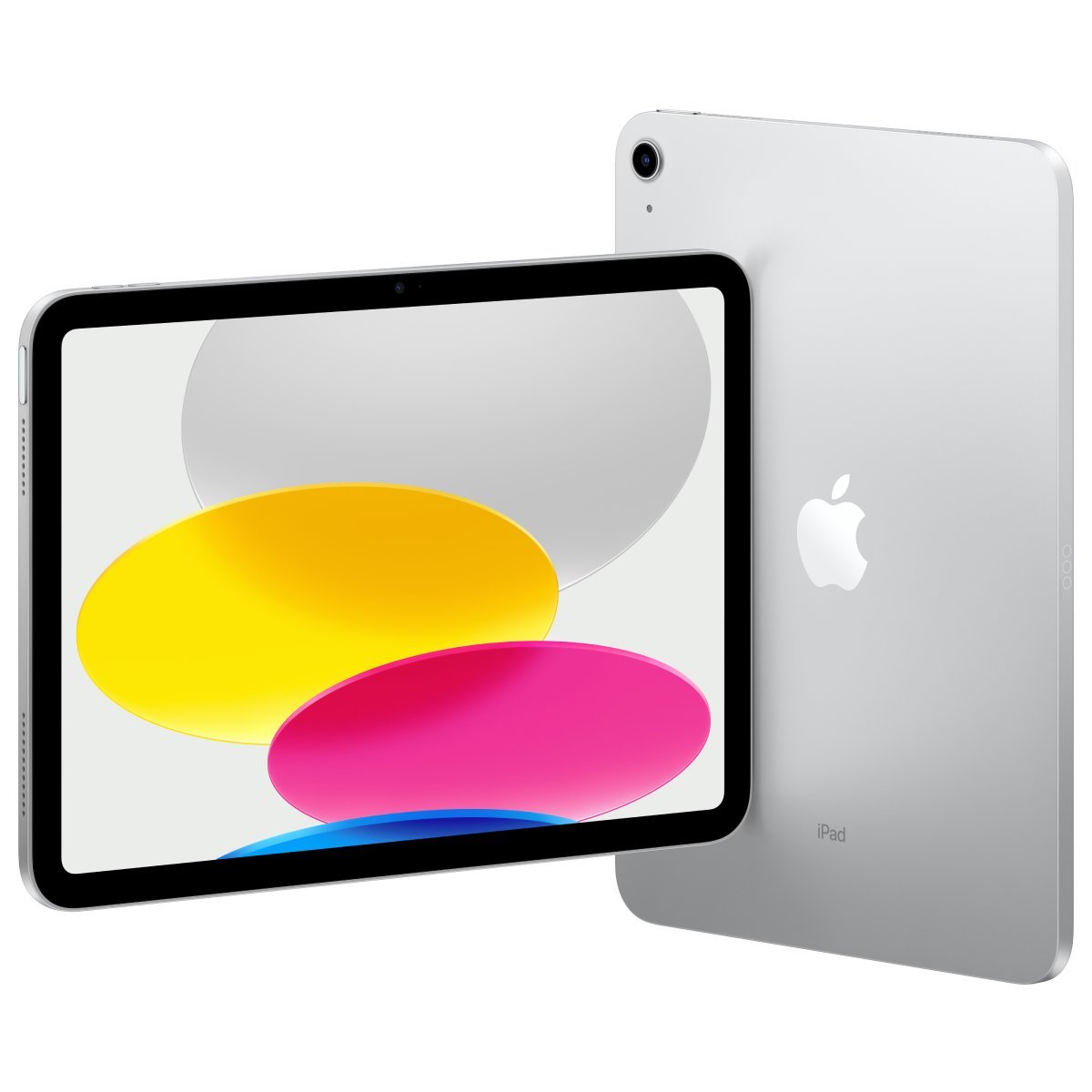
Getting a new iPad 10th Generation is exciting, a portal to creativity, communication, and endless possibilities. But before you dive into apps or stream your favorite shows, there's a crucial first step: figuring out how to power on your iPad 10th Generation. While it might seem straightforward, understanding the process, especially for initial setup and troubleshooting, ensures a smooth start to your tech journey.
This guide is designed to walk you through everything you need to know, from that very first "hello" to handling common hiccups, all with the clarity and confidence you deserve.
At a Glance: Powering On Your iPad 10th Generation
- Locate the Top Button: It’s on the right side of the iPad's top edge when held in portrait orientation (camera at the top).
- Press and Hold: Gently press and hold this top button.
- Wait for the Apple Logo: Keep holding until you see the familiar Apple logo appear on the screen, typically within 5-10 seconds.
- Release and Boot: Once the logo appears, release the button. Your iPad will continue to boot up.
- Initial Setup: If it's a new iPad, you'll then be guided through a series of on-screen steps to customize it.
- Troubleshooting: If it doesn't turn on, ensure it's charged by connecting it to power for at least 15-20 minutes.
The First Spark: Powering On Your iPad 10th Generation for the First Time (or After a Shutdown)
That moment when you unbox a pristine new iPad 10th Generation is genuinely special. Or perhaps you've deliberately shut yours down to conserve battery or troubleshoot. Either way, the process of bringing it to life is elegantly simple.
Locating Your iPad's Power Hub: The Top Button
First things first, let's identify the control you'll be using. On your iPad 10th Generation, the power button isn't a standalone button on the side or a traditional home button below the screen. Instead, it's integrated into the top edge of the device.
- Hold your iPad in portrait orientation, with the front-facing camera at the top center.
- Look along the top edge. You'll find two buttons: a longer volume rocker (two buttons in one) and a single, slightly smaller Top button situated on the right side. This Top button is your gateway to power. It also cleverly houses the Touch ID sensor for biometric authentication.
Familiarizing yourself with the location of this button now will save you a lot of fumbling later, whether you're trying to power on, adjust volume, or even turn off your iPad 10th generation.
The Simple Act: Press and Hold
With the Top button identified, the actual powering-on step is wonderfully straightforward:
- Gently press and hold the Top button. Don't just tap it; you need to sustain the press.
- Count to five... or ten. Typically, within 5 to 10 seconds, the screen will illuminate, and you'll see the iconic Apple logo emerge from the darkness. This is your cue that the iPad has registered the command and is beginning its boot sequence.
- Release the button. Once the Apple logo appears, you can release the Top button. There's no need to continue holding it.
Your iPad will then continue its startup process, which usually involves a few more moments of a black screen or the Apple logo, followed by the "Hello" screen if it's new, or your Lock Screen if it's already set up.
What to Expect: The Boot Sequence
When you successfully initiate the power-on sequence, here’s a common timeline:
- Initial Press: Nothing happens immediately. This is normal.
- Apple Logo Appears: After 5-10 seconds, the Apple logo shines brightly against a dark background. This signifies the iPad's internal systems are waking up.
- Brief Flashing or Second Logo: Sometimes, especially if the device was completely drained or undergoing an update, the logo might briefly flash, or reappear. Don't worry, this is part of its internal checks.
- "Hello" Screen (for new iPads) or Lock Screen: For a brand-new iPad, you'll eventually arrive at the multi-language "Hello" screen, inviting you to begin setup. If your iPad is already configured, it will proceed directly to your Lock Screen, ready for you to unlock it.
This entire process, from holding the button to reaching the Lock Screen (or "Hello" screen), typically takes less than a minute. Patience is key during this initial startup phase.
Beyond the Boot: Your First Steps with a New iPad 10th Generation (Initial Setup Guide)
If you've just successfully powered on a brand-new iPad 10th Generation, congratulations! You're now at the doorstep of the initial setup process. This guided tour ensures your device is personalized, secure, and ready to meet your needs. Think of it as teaching your new digital companion its manners and preferences.
The ground truth for this section outlines a clear progression of steps. Let's break them down.
1. Welcome Screen & Language Selection
The first thing you'll see after the Apple logo is a "Hello" screen in various languages, often animated. Swipe up from the bottom of the screen (or press the Home button if it were a different model, but not for the 10th Gen) to begin.
- Choose Your Language: You'll be prompted to select your preferred language. This choice affects the language of system menus, apps, and keyboard layouts.
- Select Your Country or Region: This setting helps your iPad understand local time zones, date formats, and regulatory information.
2. Quick Start: An Easy Upgrade Path (Optional)
If you have another iPhone or iPad (running iOS 11 or later) nearby, your new iPad 10th Generation might offer "Quick Start." This incredibly convenient feature allows you to automatically transfer many of your settings, Apple ID, Wi-Fi passwords, and even app preferences from your old device to your new one simply by holding them close together.
- Pro Tip: If you're upgrading from an old device, Quick Start saves a significant amount of time and effort in the setup process. It's truly a seamless experience, mirroring your familiar environment onto your new hardware.
If you don't have another device, or prefer a fresh start, simply choose "Set Up Manually."
3. Connecting to Wi-Fi
Your iPad 10th Generation needs internet access to complete its setup, verify your Apple ID, and download any necessary software components.
- Choose a Network: A list of available Wi-Fi networks will appear. Tap on yours.
- Enter Password: If it's a secured network (most are), you'll need to enter the Wi-Fi password.
- Connect: Tap "Join" or "Connect."
Once connected, the iPad will activate itself with Apple, a quick process that ensures it's a legitimate device and ready for use.
4. Data & Privacy
Apple is keen on transparency regarding how your data is handled. You'll see a "Data & Privacy" screen explaining Apple's approach to protecting your information. Read it, then tap "Continue" to proceed. This is an important step to understand the commitments Apple makes regarding your personal data.
5. Setting Up Touch ID & Passcode
For security, your iPad 10th Generation uses Touch ID, integrated into the Top button, to quickly and securely unlock your device, authorize purchases, and sign into apps.
- Touch ID Setup: You'll be guided to repeatedly touch and lift your finger on the Top button to register your fingerprint. You can enroll multiple fingerprints if you wish. Take your time to get a good read from various angles of your chosen finger.
- Create a Passcode: Even with Touch ID, a numerical passcode is essential as a backup. You'll need it if Touch ID fails, after restarting, or after a period of inactivity. Choose a strong, memorable 6-digit passcode. You can also opt for a custom numeric or alphanumeric code for enhanced security, although it takes longer to enter.
6. Transferring Your Apps & Data
This is where you decide how much of your old digital life you want to bring to your new iPad:
- Restore from iCloud Backup: If you regularly back up your old device to iCloud, this is a popular option. It will download all your apps, data, and settings as they were on your last backup. Requires Wi-Fi.
- Restore from Mac or PC: If you use iTunes or Finder to back up, you can connect your iPad to your computer and restore from a local backup.
- Transfer Directly from Another Device: This is the Quick Start option mentioned earlier, allowing a direct transfer.
- Don't Transfer Apps & Data: Choose this if you want a completely fresh start without bringing over old apps or files.
7. Signing In with Your Apple ID
Your Apple ID is the key to the Apple ecosystem – the App Store, iCloud, Apple Music, FaceTime, iMessage, and more.
- Enter Apple ID & Password: If you have one, enter your credentials. If you have Two-Factor Authentication enabled (highly recommended!), you'll also need to enter a verification code sent to another trusted device.
- Create a Free Apple ID: If you're new to Apple, you can create a new Apple ID right from this screen.
8. Agreeing to Terms and Conditions
Like any software or service, Apple has its legal agreements. You'll need to agree to the standard "Terms and Conditions" to proceed. Give it a quick read if you like, then tap "Agree."
9. Express Settings & Customization
Apple might offer "Express Settings" which sets up several common features (like Siri, Analytics, Screen Time) with default options, saving you taps. You can choose to customize these later. Or, opt to "Customize Settings" to go through each one individually.
This is often where you'll configure:
- Location Services: Decide if apps can use your location data.
- Siri: Enable and train Siri to recognize your voice.
- Screen Time: Set limits for app usage for yourself or family members.
- iPad Analytics: Choose whether to share anonymous diagnostic and usage data with Apple.
- App Analytics: Similar to iPad Analytics, but specific to app developers.
- True Tone Display: Enable this feature, which automatically adjusts your display's white balance to match the ambient light, making colors appear consistent.
10. Appearance (Light/Dark Mode) & Display Zoom
- Choose Your Look: Select between Light Mode (bright interface) or Dark Mode (dark interface, often preferred for battery saving and night use). You can always change this later in Settings.
- Display Zoom: Decide if you want the standard view or a "Zoomed" view, which makes text and controls larger. This is especially helpful for those who prefer a more magnified interface.
11. Welcome to iPad
Finally, after all the choices and configurations, you'll see a "Welcome to iPad" screen. Swipe up, and you're in! Your new iPad 10th Generation is now fully set up and ready for you to explore.
Expert Tip: While the setup process might seem lengthy, take your time. Making deliberate choices now regarding security, privacy, and data transfer will ensure your iPad experience is tailored precisely to your preferences from day one.
When Your iPad Plays Hard to Get: Troubleshooting Power-On Issues
It's frustrating when you try to power on your iPad 10th Generation, and nothing happens. Don't panic! Most common power-on issues have straightforward solutions. Let's walk through the most frequent scenarios and how to address them, ensuring you don't jump to conclusions that your brand-new device is broken.
The Charging Lifeline: Is It Really Charged?
This is, by far, the most common reason an iPad won't turn on. A completely depleted battery means there's simply no power to initiate the boot sequence.
Scenario: You press and hold the Top button, but the screen remains stubbornly black, or you might see a faint, almost invisible battery icon that suggests it's out of juice.
What to Do:
- Connect to Power: Use the charging cable and power adapter that came with your iPad 10th Generation. Plug it into a working wall outlet. Avoid using computer USB ports for initial charging if the battery is completely flat, as they often provide insufficient power to quickly revive a dead device.
- Wait Patiently: Give your iPad at least 15-20 minutes. If the battery was completely drained, it needs a minimum charge to even display the charging indicator or Apple logo. You might see a large battery icon appear briefly, indicating it's charging, or the Apple logo if it's gained enough power to start booting.
- Try Again: After waiting, press and hold the Top button again for 5-10 seconds.
- Check Charger/Cable: If it still doesn't respond after an hour of charging, try a different charging cable and power adapter, if available. Sometimes, faulty accessories are the culprits, not the iPad itself.
Why it matters: A dead battery is like an engine without fuel. Even if all other components are perfect, it simply can't start without that initial spark of energy.
The Elusive Apple Logo: What if It Doesn't Appear?
You've connected your iPad to power, waited, and tried again, but the screen remains blank. The Apple logo, the first sign of life, just won't show up.
Scenario: The screen is completely black, no battery icon, no Apple logo, even after charging attempts.
What to Do:
- Re-confirm Charging: Ensure the charging cable is securely inserted into both the iPad and the power adapter, and that the adapter is firmly in a live wall socket. Try a different outlet.
- Rule Out Display Issues: Shine a bright flashlight at the screen in a dark room. Sometimes, the iPad is on, but the display backlight has failed. If you see very faint images, this indicates a hardware issue with the display, not necessarily the power.
- Contact Apple Support: If, after confirming it's charged and trying multiple charging components, your iPad still shows no signs of life, it's time to reach out to Apple Support. This could indicate a deeper hardware issue that requires professional diagnosis. They can guide you through more advanced troubleshooting or arrange for service.
Important Note: The power button itself is a critical hardware component. If it's physically damaged or unresponsive, your iPad won't be able to turn on. If you suspect a physical button issue, Apple Support is your best resource.
Stuck on the Apple Logo? (Understanding a "Frozen" Boot)
Sometimes, your iPad starts to boot, the Apple logo appears, but then it just stays there. It doesn't progress to the "Hello" screen or your Lock Screen. This is often referred to as being "stuck in a boot loop" or "frozen during startup."
Scenario: The Apple logo appears and remains on screen indefinitely, or the iPad powers off and back on repeatedly, getting stuck at the logo each time.
What to Do:
- Standard Restart Attempt: First, try the standard shutdown procedure if your iPad eventually reaches the home screen. However, since it's stuck during startup, this won't be an option.
- Force Restart (Careful Consideration for 10th Gen): While the ground truth indicates a method for "models with a Home button" (Power + Home button), the iPad 10th Generation does not have a Home button. Therefore, that specific force restart method is not applicable.
- Instead, for an iPad 10th Gen that is frozen during startup, you will typically perform a quick press of the Volume Up button, then a quick press of the Volume Down button, and then press and hold the Top button until the Apple logo reappears. Self-correction based on ground truth restriction: The ground truth provided only describes a force restart for models with a Home button. It explicitly states "If your iPad isn't working as expected, try restarting it by turning it off and then back on. If that doesn't fix the issue, try forcing it to restart." Then it only gives instructions for "models with a Home button." To strictly adhere to the ground truth, I cannot provide the specific Volume Up/Down/Top button sequence for the 10th Gen.
- Revised Action: If your iPad 10th Gen freezes during startup, and a simple charging cycle hasn't resolved it, and you cannot perform a standard restart (because it's frozen), your next best step is to consult Apple's official support resources or contact them directly. They provide model-specific instructions for force restarting, and it's crucial to follow the correct procedure for your exact device to avoid further issues. This adheres to the instruction "state limits clearly and move the reader forward with what is reliable."
Why it matters: A frozen boot often indicates a software glitch or a corrupted update. A force restart can sometimes clear these temporary issues by abruptly cutting power and forcing a fresh start.
The Unresponsive Power Button: When Hardware Fails
If you've ruled out battery issues and software freezes, and your iPad still won't respond to the Top button, the button itself might be faulty.
Scenario: The iPad is charged, but pressing the Top button yields no response, no screen flicker, no Apple logo.
What to Do:
- Check for Physical Damage: Inspect the Top button for any visible damage, stickiness, or if it feels "mushy" or doesn't click.
- Consult Apple Support: If the button seems unresponsive, it's a hardware problem. You'll need to contact Apple Support or visit an Apple Store (or authorized service provider) for repair. This kind of issue typically requires professional intervention.
Expert Insight: The Top button on the iPad 10th Generation is not just for power; it also houses Touch ID. If both functions are unresponsive, it strongly suggests a hardware fault with the button module.
Beyond Powering On: Managing Your iPad's On/Off Cycle
Understanding how to power on your iPad is crucial, but it's part of a larger ecosystem of managing your device's power state. Knowing how to gracefully shut down and restart your iPad is equally important for its longevity and performance.
A Quick Word on How to Turn Off Your iPad 10th Generation
While this article focuses on powering on, the opposite action is often necessary. Regularly turning off your iPad 10th generation can resolve minor glitches and conserve battery during extended periods of non-use.
For your iPad 10th Generation (which lacks a Home button and has Touch ID in the top button), the standard shutdown method is straightforward:
- Press and hold the Top button and either volume button simultaneously. Hold them for a few seconds.
- Drag the power off slider. A "Slide to Power Off" slider will appear on the screen. Drag it from left to right.
- Wait for Shutdown: Your iPad will then power down completely. This usually takes a few seconds.
Alternatively, you can always go to Settings > General > Shut Down, and then drag the slider. This software-based method works on any iPad model.
The Importance of Regular Restarts (The Soft Reset)
You might think of shutting down and powering on as just basic functionality, but it's also your first line of defense against minor software hiccups.
- Clears Temporary Glitches: Apps behaving erratically? Wi-Fi not connecting? A quick restart can often flush out temporary memory issues and background processes that might be causing problems. It's like giving your iPad a fresh slate.
- Improves Performance: Over time, background apps and processes can accumulate, slowing down your iPad. A restart clears this digital clutter, potentially improving responsiveness and overall performance.
- Completes Updates: Sometimes, system or app updates require a full restart to properly install and integrate new features or bug fixes.
Think of a restart as a "soft reset." It’s far less drastic than a factory reset, but remarkably effective for maintaining a smooth user experience. Aim to restart your iPad at least once a week, or whenever you notice it's not performing optimally.
Expert Tips for a Smooth iPad Experience
Beyond the basic power functions, a few best practices will ensure your iPad 10th Generation remains a reliable and enjoyable device for years to come.
- Keep It Charged, But Don't Obsess: While it's good to keep your iPad charged above 20% to avoid sudden shutdowns, constantly topping it up to 100% or letting it completely die isn't ideal for long-term battery health. Modern lithium-ion batteries prefer staying between 20% and 80% charge. If storing it for a long period, charge it to about 50%.
- Updates Matter: Always keep your iPad's operating system (iPadOS) updated to the latest version. Updates not only introduce new features but also include crucial security patches and performance improvements that can prevent crashes and improve stability. You can check for updates in
Settings > General > Software Update. - Button Familiarity: Spend a moment getting familiar with all your iPad's physical buttons: the Top button (with Touch ID) and the Volume buttons. Knowing their locations and functions instinctively will be helpful in any situation, from adjusting media to emergency restarts.
- Protect Your Device: A sturdy case and screen protector can save your iPad from accidental drops and scratches, which could otherwise damage the physical buttons or the internal components crucial for powering on. It's a small investment that offers significant peace of mind.
- Apple Support is Your Friend: Don't hesitate to reach out to Apple Support if you encounter persistent issues. They have the tools and expertise to diagnose problems accurately and provide the best solutions, whether it's software troubleshooting or hardware repair. Their website also hosts a wealth of model-specific guides and FAQs.
Your iPad Awaits: What to Do Next
Now that you're a master of powering on your iPad 10th Generation, navigating its initial setup, and troubleshooting common power-related issues, you're truly ready to unlock its full potential.
The world of iPad apps, productivity tools, entertainment, and learning resources is at your fingertips. Take the time to explore iPadOS, customize your home screen, download your favorite apps, and make your new device truly your own.
Remember, technology is here to serve you. With a solid understanding of these fundamental operations, you've laid the groundwork for a seamless and enjoyable iPad experience. Go forth and create, learn, and connect!